2D and 3D Game Development
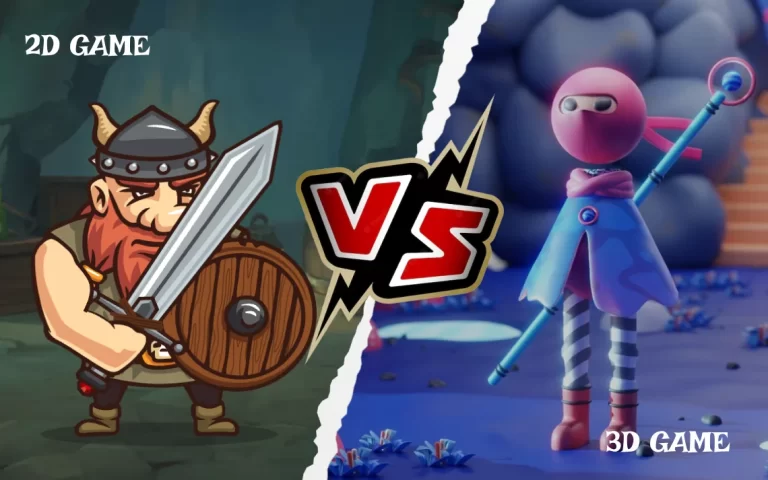
2D and 3D game development are two core approaches to creating digital games, each offering unique styles, tools, and challenges. 2D game development involves designing games with flat graphics, using sprites and tilemaps to build characters, backgrounds, and interfaces. It’s ideal for platformers, puzzles, and mobile games due to its simplicity and efficiency. 3D game development, on the other hand, uses three-dimensional models, environments, and physics, allowing for more immersive and realistic experiences. It is commonly used in genres like action, simulation, and adventure games. Both 2D and 3D development require knowledge of design principles, programming (often in C# when using engines like Unity), and an understanding of the game engine’s capabilities. Developers choose between 2D and 3D based on gameplay goals, artistic vision, and target platforms.
2D and 3D game development are two core approaches to creating digital games, each offering unique styles, tools, and challenges. 2D game development involves designing games with flat graphics, using sprites and tilemaps to build characters, backgrounds, and interfaces. It’s ideal for platformers, puzzles, and mobile games due to its simplicity and efficiency. 3D game development, on the other hand, uses three-dimensional models, environments, and physics, allowing for more immersive and realistic experiences. It is commonly used in genres like action, simulation, and adventure games. Both 2D and 3D development require knowledge of design principles, programming (often in C# when using engines like Unity), and an understanding of the game engine’s capabilities. Developers choose between 2D and 3D based on gameplay goals, artistic vision, and target platforms.
-
-
🔹 Common Topics for Both 2D and 3D Development
-
Game Development Basics
– Game loop, frame rate, input handling, and event systems. -
Scripting with C# (Unity)
– Player controls, interactions, animations, and UI logic. -
Asset Management
– Importing, organizing, and using textures, audio, and models. -
User Interface (UI) Design
– Menus, buttons, health bars, HUDs, and interactive UI elements. -
Animation Systems
– Animator, transitions, blend trees, and triggering animations through code.
🔷 2D Game Development Topics
-
Sprites and Sprite Sheets
– Working with 2D images, sprite slicing, and animation frames. -
Tilemaps and Grids
– Building levels using tile-based systems for platforms and backgrounds. -
2D Physics and Collisions
– Rigidbody2D, BoxCollider2D, CircleCollider2D, and physics materials. -
Parallax Scrolling
– Creating depth in 2D games through layered background movement. -
2D Lighting and Effects
– Adding lighting and visual polish to 2D scenes.
🔶 3D Game Development Topics
-
3D Models and Meshes
– Importing and manipulating 3D assets and environments. -
3D Physics and Colliders
– Rigidbody, BoxCollider, MeshCollider, gravity, and forces. -
Camera Setup and Control
– First-person, third-person, and cinematic camera systems. -
Navigation and Pathfinding
– NavMesh, AI agents, and movement in 3D space. -
Lighting and Shadows
– Directional lights, point lights, baked lighting, and real-time shadows. -
Materials and Shaders
– Creating surface effects, reflections, and transparency using Unity’s Shader Graph or built-in materials.
-
-
What is the difference between 2D and 3D game development?
2D games use flat, two-dimensional graphics with height and width, while 3D games incorporate depth, using models and environments with height, width, and depth for a more realistic visual experience.
Which is easier to learn: 2D or 3D game development?
2D game development is generally easier for beginners because it involves simpler graphics, physics, and logic. 3D development has a steeper learning curve due to added complexity in modeling, lighting, and spatial design.
Kerala
Thiruvalla, Pandalam, Adoor, Pathanamthitta, Kayamkulam, Kottayam, Marthandam, Neyyattinkkara, Nedumangad, Thiruvananthapuram City, Kilimanoor, Karikode, Kollam City, Karunagapally, Punalur, Anchal, Kuttikkanam, Elappara, Kalamassery, Kaloor, Angamali, Thrissur, Palakkad, Manjeri, Valanchery, Perinthalmanna, Calicut (Kozhikode), Perumbavoor, Vyttilla, Alappuzha, Harippad.
Tamil Nadu
Velachery, Anna Nagar, Thiruvattiyoor, Neyveli, Aranthangi, Pudukottai, Nagapattinam, Karaikal, Ariyalur, Mulumichampatti, Saravanampatti, Gandhipuram, Kumbakonam, Mayiladuthurai, Vaniyambadi, Vellore, Tirupattur (Vellore), Kancheepuram, Thiruvannamalai, Hosur, Hosur East.
Karnataka
Bangalore Electronic City, Mysore Kuvempunagar, Mysore City.
Andhra Pradesh
Panruti, Dilsukhnagar, Chittoor, West Godavari.
Maharashtra
Panvel, Dombivli, Dombivli East, Thane, Kalyan, Akurdi, Chinchwad, Nigdi, Karvenagar, Revet, Kothrud.
West Bengal
Kolkata, Durgapur.
Rajasthan
Sikar, Kota, Jhalawar.
Jharkhand
Ranchi.
Uttar Pradesh
Allahabad, Lucknow, Rambagh.
2D and 3D game development are two core approaches to creating digital games, each offering unique styles, tools, and challenges. 2D game development involves designing games with flat graphics, using sprites and tilemaps to build characters, backgrounds, and interfaces. It’s ideal for platformers, puzzles, and mobile games due to its simplicity and efficiency. 3D game development, on the other hand, uses three-dimensional models, environments, and physics, allowing for more immersive and realistic experiences. It is commonly used in genres like action, simulation, and adventure games. Both 2D and 3D development require knowledge of design principles, programming (often in C# when using engines like Unity), and an understanding of the game engine’s capabilities. Developers choose between 2D and 3D based on gameplay goals, artistic vision, and target platforms.
-
-
🔹 Common Topics for Both 2D and 3D Development
-
Game Development Basics
– Game loop, frame rate, input handling, and event systems. -
Scripting with C# (Unity)
– Player controls, interactions, animations, and UI logic. -
Asset Management
– Importing, organizing, and using textures, audio, and models. -
User Interface (UI) Design
– Menus, buttons, health bars, HUDs, and interactive UI elements. -
Animation Systems
– Animator, transitions, blend trees, and triggering animations through code.
🔷 2D Game Development Topics
-
Sprites and Sprite Sheets
– Working with 2D images, sprite slicing, and animation frames. -
Tilemaps and Grids
– Building levels using tile-based systems for platforms and backgrounds. -
2D Physics and Collisions
– Rigidbody2D, BoxCollider2D, CircleCollider2D, and physics materials. -
Parallax Scrolling
– Creating depth in 2D games through layered background movement. -
2D Lighting and Effects
– Adding lighting and visual polish to 2D scenes.
🔶 3D Game Development Topics
-
3D Models and Meshes
– Importing and manipulating 3D assets and environments. -
3D Physics and Colliders
– Rigidbody, BoxCollider, MeshCollider, gravity, and forces. -
Camera Setup and Control
– First-person, third-person, and cinematic camera systems. -
Navigation and Pathfinding
– NavMesh, AI agents, and movement in 3D space. -
Lighting and Shadows
– Directional lights, point lights, baked lighting, and real-time shadows. -
Materials and Shaders
– Creating surface effects, reflections, and transparency using Unity’s Shader Graph or built-in materials.
-
-
What is the difference between 2D and 3D game development?
2D games use flat, two-dimensional graphics with height and width, while 3D games incorporate depth, using models and environments with height, width, and depth for a more realistic visual experience.
Which is easier to learn: 2D or 3D game development?
2D game development is generally easier for beginners because it involves simpler graphics, physics, and logic. 3D development has a steeper learning curve due to added complexity in modeling, lighting, and spatial design.
2D games use flat, two-dimensional graphics with height and width, while 3D games incorporate depth, using models and environments with height, width, and depth for a more realistic visual experience.
2D game development is generally easier for beginners because it involves simpler graphics, physics, and logic. 3D development has a steeper learning curve due to added complexity in modeling, lighting, and spatial design.
Kerala
Thiruvalla, Pandalam, Adoor, Pathanamthitta, Kayamkulam, Kottayam, Marthandam, Neyyattinkkara, Nedumangad, Thiruvananthapuram City, Kilimanoor, Karikode, Kollam City, Karunagapally, Punalur, Anchal, Kuttikkanam, Elappara, Kalamassery, Kaloor, Angamali, Thrissur, Palakkad, Manjeri, Valanchery, Perinthalmanna, Calicut (Kozhikode), Perumbavoor, Vyttilla, Alappuzha, Harippad.
Tamil Nadu
Velachery, Anna Nagar, Thiruvattiyoor, Neyveli, Aranthangi, Pudukottai, Nagapattinam, Karaikal, Ariyalur, Mulumichampatti, Saravanampatti, Gandhipuram, Kumbakonam, Mayiladuthurai, Vaniyambadi, Vellore, Tirupattur (Vellore), Kancheepuram, Thiruvannamalai, Hosur, Hosur East.
Karnataka
Bangalore Electronic City, Mysore Kuvempunagar, Mysore City.
Andhra Pradesh
Panruti, Dilsukhnagar, Chittoor, West Godavari.
Maharashtra
Panvel, Dombivli, Dombivli East, Thane, Kalyan, Akurdi, Chinchwad, Nigdi, Karvenagar, Revet, Kothrud.
West Bengal
Kolkata, Durgapur.
Rajasthan
Sikar, Kota, Jhalawar.
Jharkhand
Ranchi.
Uttar Pradesh
Allahabad, Lucknow, Rambagh.