
Microservices
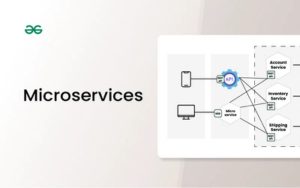
Microservices in cloud computing refer to an architectural style where applications are built as a collection of small, independent services that communicate with each other over APIs. Each microservice performs a specific business function and can be developed, deployed, and scaled independently. Cloud computing provides the ideal environment to host, manage, and scale these microservices due to its on-demand resources, scalability, and flexibility.
Microservice is a small, loosely coupled service that is designed to perform a specific business function and each microservice can be developed, deployed, and scaled independently.
How do Microservices work?
Microservices break complex applications into smaller, independent services that work together, enhancing scalability, and maintenance. Below is how microservice work:
- Applications are divided into self-contained services, each focused on a specific function, simplifying development and maintenance.
- Each microservice handles a particular business feature, like user authentication or product management, allowing for specialized development.
- Services interact via APIs, facilitating standardized information exchange and integration.
- Different technologies can be used for each service, enabling teams to select the best tools for their needs.
- Microservices can be updated independently, reducing risks during changes and enhancing system resilience.
What are the main components of Microservices Architecture?
Main components of microservices architecture include:
- Microservices: Small, loosely coupled services that handle specific business functions, each focusing on a distinct capability.
- API Gateway: Acts as a central entry point for external clients also they manage requests, authentication and route the requests to the appropriate microservice.
- Service Registry and Discovery: Keeps track of the locations and addresses of all microservices, enabling them to locate and communicate with each other dynamically.
- Load Balancer: Distributes incoming traffic across multiple service instances and prevent any of the microservice from being overwhelmed.
- Containerization: Docker encapsulate microservices and their dependencies and orchestration tools like Kubernetes manage their deployment and scaling.
- Event Bus/Message Broker: Facilitates communication between microservices, allowing pub/sub asynchronous interaction of events between components/microservices.
- Database per Microservice: Each microservice usually has its own database, promoting data autonomy and allowing for independent management and scaling.
- Caching: Cache stores frequently accessed data close to the microservice which improved performance by reducing the repetitive queries.
- Fault Tolerance and Resilience Components: Components like circuit breakers and retry mechanisms ensure that the system can handle failures gracefully, maintaining overall functionality.
-
- Introduction to Microservices
- Cloud Computing Basics
- Microservices Architecture in the Cloud
- Communication Between Microservices
- Deployment and Containerization
- Service Discovery and Load Balancing
- Monitoring and Logging
- Security in Microservices
- Data Management in Microservices
- Serverless Microservices
- Scalability and Resilience
- Microservices Governance and Best Practices
What are microservices?
Microservices are a software architectural style where applications are composed of small, independent services that communicate via APIs. Each service handles a specific business function.
How are microservices different from monolithic applications?
In a monolithic application, all functions are tightly integrated into a single codebase and deployed together. Microservices break this into separate components that can be deployed and scaled independently.
Why use microservices?
They provide better scalability, flexibility, faster development, easier maintenance, and better fault isolation.
Kerala
Thiruvalla, Pandalam, Adoor, Pathanamthitta, Kayamkulam, Kottayam, Marthandam, Neyyattinkkara, Nedumangad, Thiruvananthapuram City, Kilimanoor, Karikode, Kollam City, Karunagapally, Punalur, Anchal, Kuttikkanam, Elappara, Kalamassery, Kaloor, Angamali, Thrissur, Palakkad, Manjeri, Valanchery, Perinthalmanna, Calicut (Kozhikode), Perumbavoor, Vyttilla, Alappuzha, Harippad.
Tamil Nadu
Velachery, Anna Nagar, Thiruvattiyoor, Neyveli, Aranthangi, Pudukottai, Nagapattinam, Karaikal, Ariyalur, Mulumichampatti, Saravanampatti, Gandhipuram, Kumbakonam, Mayiladuthurai, Vaniyambadi, Vellore, Tirupattur (Vellore), Kancheepuram, Thiruvannamalai, Hosur, Hosur East.
Karnataka
Bangalore Electronic City, Mysore Kuvempunagar, Mysore City.
Andhra Pradesh
Panruti, Dilsukhnagar, Chittoor, West Godavari.
Maharashtra
Panvel, Dombivli, Dombivli East, Thane, Kalyan, Akurdi, Chinchwad, Nigdi, Karvenagar, Revet, Kothrud.
West Bengal
Kolkata, Durgapur.
Rajasthan
Sikar, Kota, Jhalawar.
Jharkhand
Ranchi.
Uttar Pradesh
Allahabad, Lucknow, Rambagh.